An evolving winemaking approach
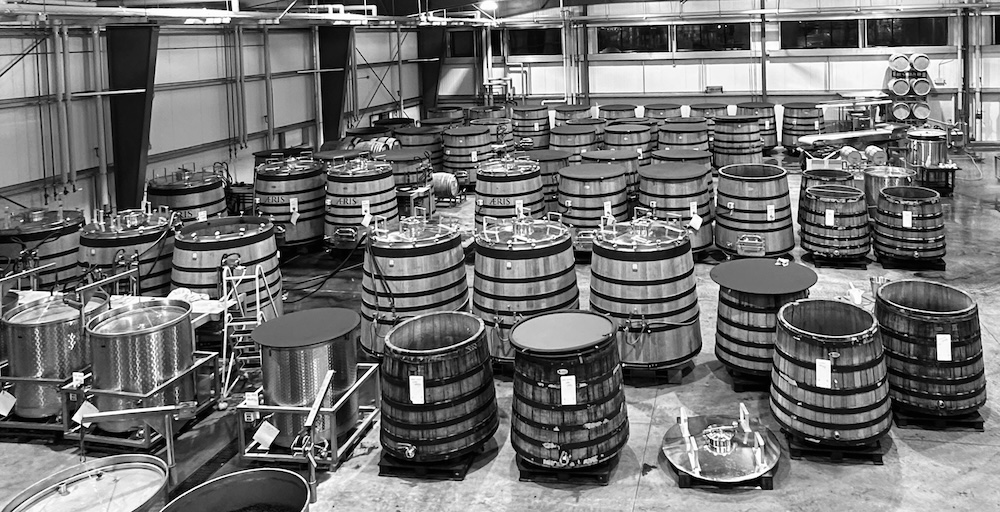
As the vineyard has matured, so too has our winemaking—always in response to the fruit rather than in pursuit of a fixed stylistic endpoint. From the outset, the guiding principle has been transparency over extraction, allowing Nebbiolo’s inherent structure to articulate place without being forced. Fermentations are intentionally long, typically 28–30 days on skins, using time as the primary extraction tool rather than aggressive cap management. During these extended fermentations, we increasingly rely on submerged cap techniques, promoting slow, even extraction, preserving aromatic freshness, and integrating tannins without harshness.
In the cellar, we have shifted progressively toward whole berry fermentations, moving away from earlier partial crushing. Fermenting with intact berries limits early mechanical extraction and helps preserve Nebbiolo’s lifted aromatics and red-fruited precision, while allowing tannins to build gradually through diffusion rather than force.
As lignification has improved with vine age, we have also begun trialing small amounts of whole cluster fermentation on a block-by-block basis. These trials are exploratory, used to understand how stem inclusion can influence tannin architecture, aromatic layering, and mid-palate structure without obscuring site character.
Across all approaches, élevage is treated as a phase of refinement rather than correction—allowing the wines to settle into balance organically while preserving the clarity of the vineyard.
A dialogue between site, biotype, and time
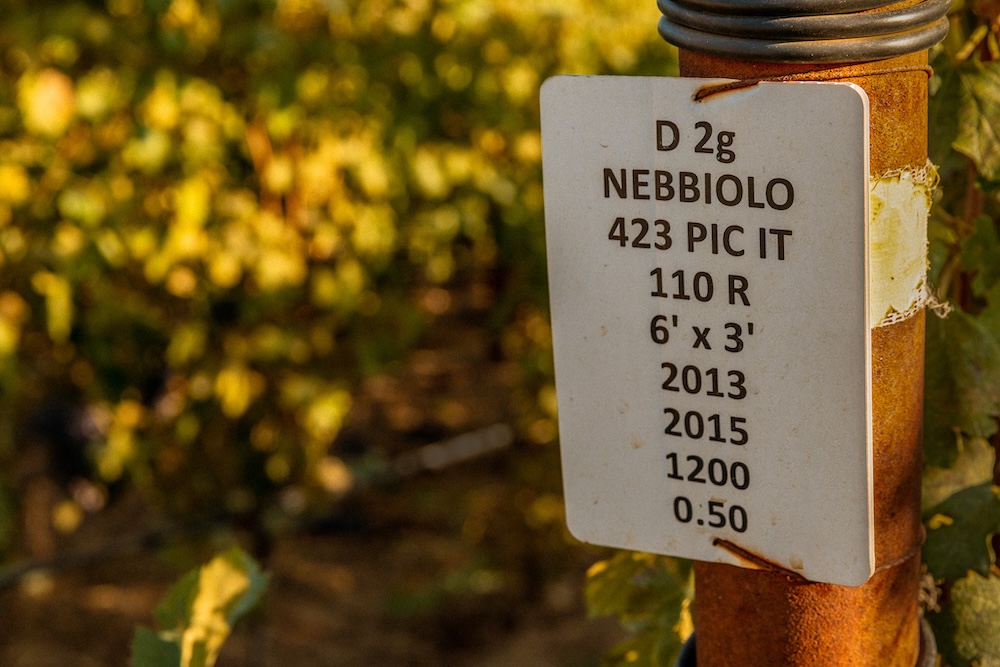
Centennial Mountain Nebbiolo is not about a single clone or a singular technique. It is about the interaction between site and biotype, fermentation and time—a gradual convergence toward an expression that feels inevitable rather than engineered. We are still in the learning phase, and intentionally so. With each vintage, the vineyard continues to sharpen the conversation, revealing how genetic diversity, long fermentations, whole berry and submerged cap techniques, and measured evolution in the cellar can come together to express this mountain site with increasing precision and depth.
The 2022 Centennial Mountain Nebbiolo
Now in its second vintage, the 2022 Centennial Mountain Nebbiolo marks a meaningful inflection point in this long-view journey. In Vinous, Billy Norris described the wine as “exceptional… a profound and emotionally moving wine that exemplifies the very best attributes of its kind,” concluding that it is “the finest domestic Nebbiolo I’ve ever encountered.” Matthew Luczy of The Wine Advocate echoed that perspective, calling the 2022 Nebbiolo “a transcendent expression of the varietal from this side of the Atlantic,” noting its balance, refinement, and capacity to evolve gracefully for decades.
For our members, these responses affirm what Nebbiolo has taught us from the beginning: that patience matters, restraint reveals truth, and when site, variety, and intention align, the results can be breathtaking. The 2022 Centennial Mountain Nebbiolo is not an endpoint. Instead, it is like stopping to enjoy a majestic mountain view on a longer journey, where we can see both the road behind and the one ahead with clarity